
Designing for Trust in BFSI and Healthcare

Trust is often treated as a communication problem – something to be solved with better messaging, sleek branding or AI chatbots. But in BFSI and Healthcare, that approach doesn’t hold. Trust isn’t claimed; it’s experienced. In these sectors, interactions aren’t casual. A claim, a diagnosis, or a payment carries heavy emotional weight. Users aren’t “exploring options” – they are trying to be certain. THE EROSION CYCLE Most systems are designed to complete a process, not to reduce doubt. When flows prioritize data capture over clarity, we trigger a dangerous chain reaction: Gaps in understanding → Users filling gaps themselves → Guessing → Trust eroding. Think about a typical insurance journey. Technically, nothing is broken. The forms work. The “Submit” button triggers a response. Yet, the user feels uneasy because: The system works, but the experience fails to reassure. THE ANATOMY OF ASSURANCE In high-stakes environments, users aren’t looking for “delight” – they are looking for assurance. Real trust is built on three pillars:1. Clarity: What is happening right now?2. Control: What can I actually do about it?3. Predictability: What exactly happens next? We often see organizations try to “signal” trust through badges and copy. But a clear claims timeline builds more trust than a “We Care” banner. A guided medical report builds more trust than a beautiful UI. Our role as designers isn’t to remove the complexity required by compliance, but to translate it into something actionable. In BFSI and healthcare, users are not looking for delight. They are looking for assurance. In insurance, they buy the hope of support when things go wrong.In healthcare, they trust the system to help them recover.Design cannot change the policy or the diagnosis. But it shapes how both are understood. THE BOTTOM LINE Trust is tested most when things go wrong-a delayed claim or an unexpected medical outcome. These are the moments where transparency and clear reasoning can actually strengthen a relationship rather than shatter it. Trust isn’t a layer you add at the end of a project. It is built (or lost) in the quiet, functional moments of a journey. How is your team designing for certainty in high-stress user journeys? This post has been taken from the LinkedIn post by Nazim Iqbal
Rise of the Human-Centered Design

We are now at an inflection in the digital evolution, and for design to be really impactful, it has to step out from the realm of designers. Which brings up the question: what would designer do, if everybody is a designer.
How can a designer respond to climate change

So, how can a product designer or UI/UX designer or any other kind of designer become part of the solution for climate change? What can a designer do to influence or impact climate change, even if in a small way?
Why financial & banking sectors need human touch more than others: Part 2
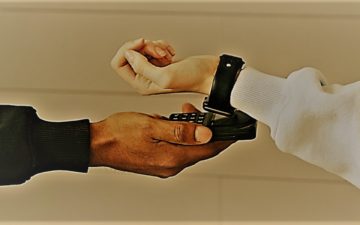
30 March 2022. Financial institutions should ensure digital touch points are designed as conversations – real and human. This will earn them trust, and also inspire pride in their employees.
Evolution of human digital needs

15 March 2022. The pandemic accelerated digital adoption. The need to be digitally astute and accessible now cuts across sectors. Unfortunately, the war threatens to undo the progress. It is a threat that could stall the humanising of digital with the conflict pushing a dehumanising narrative in multiple dimensions.
How human is your organisation
20 February 2022. Business performance and revenue are no longer the only parameters on which business is measured. What was earlier considered pure human attributes are now parameters on which organisations are judged.
Why financial & banking sectors need human touch more than others: Part I
3 February 2022. To achieve growth in the post-pandemic world, BFSI sector companies need to respond to customers’ emotional needs like hope and trust
How Cafe Coffee Day designed a conversation culture in India
9 November 2021. Cafe Coffee Day spawned a popular culture in India, of people bonding over non-alcoholic beverages. Design was at its center.
What I learnt about CX at my Abbu’s (father’s) shop
8 November 2021. My father built an optical shop in the busiest business district of Calcutta. That was my first real-world design school.